
Exploring the Mechanism of Complex Lemon-Angelica Sinensis-Boswellia Essential Oil on Anxiety Disorders with Melasma Through Network Pharmacology and Experimental Validation
- Open Access
- Peer Reviewed
- Similarity Checked
- CC BY 4.0

Abstract
The incidence rate of melasma is notably high among patients with anxiety disorders. Aromatherapy primarily influences the physiological and psychological states of individuals through the inhalation or application of essential oils, thereby facilitating the treatment or alleviation of various conditions. This study aims to explore the action mechanism of complex lemon-angelica sinensis -boswellia essential oil (CEO) in treating anxiety disorders with melasma. We investigated the active ingredients, targets, and pathways of CEO in relation to anxiety and melasma using network pharmacology. We employed cell assays and conducted nebulized essential oil inhalation tests on CUMS mice to validate the intervention effects of CEO on anxiety. A total of 28 active components, including neryl acetate, 3-butenylphthalide and octyl acetate, and 26 cross-targets, such as ESR1, CCND1 and PIK3CA, were identified. GO and KEGG pathway analyses indicated that these cross-targets were primarily involved in endocrine regulation, cell proliferation, and apoptosis, specifically through PI3K/Akt signaling pathway and calcium signaling pathway. The experimental results demonstrated that CEO significantly reduced the secretion of NO, TNF-a and IL-6, as well as the mRNA expressions of ESR1, CCND1 and PIK3CA in cells compared to the inflammatory cell model. Furthermore, CEO notably decreased the forced swimming immobility time of mice and the levels of IL-1β, ESR1 and CCND1 in hippocampus when compared to model mice. These findings suggest that CEO may regulate ESR1, CCND1 and PIK3CA through its citral, 3-butylphthalate and neryl acetate, thereby influencing endocrine function, cell proliferation and apoptosis, inhibiting inflammation and anxiety-like behavior in CUMS-induced mice.
Article Information
- Received
- Accepted
- Published
Copyright © 2025 Xu Xu, et al.
 This is an open-access article distributed under the terms of the Creative Commons Attribution License, which permits unrestricted use, distribution, and reproduction in any medium, provided the original author and source are credited.
Corresponding author: Liping Liu, College of Biological and Environmental Sciences, Zhejiang Wanli University, Ningbo, China —
Competing Interests
The authors declare no conflict of interest in the research, authorship, and/or publication of this article.
Funding
The research was funded by key R&D plan project of Ningbo (2023Z158) and Ningbo public welfare science and technology plan project (2022S186). We Sincerely thank to the experimental center of the biology and environment college in Zhejiang Wanli University for providing experimental instrument support.
Data Availability
All data generated or analysed during this study are included in this article. Further enquiries can be directed to the corresponding author.
Citation:
Introduction
Anxiety disorders are neurological disorders characterized by anxiety, while melasma is a type of melanotic dermatosis that appears on the face. Modern medicine posits that the development of anxiety disorders and melasma is closely linked to endocrine imbalances and mental health1. Clinical data indicates a high incidence of melasma among individuals with anxiety, particularly impacting the physical and mental well-being of women, especially those who are pregnant or experiencing menopause2. In traditional Chinese medicine, anxiety disorders and melasma fall under the categories of 'Depression syndrome' and 'Liver spot'3, with 'Liver-Qi stagnation' identified as a primary cause4. These conditions often coexist, leading to the term 'anxiety disorders with melasma'. Current treatments for anxiety disorders typically involve medications like benzodiazepines, serotonin reuptake inhibitors, or βadrenergic receptor blockers, while melasma is commonly treated with oral supplements such as vitamin C, vitamin E, and tranexamic acid, as well as topical applications of hydroquinone, kojic acid, azelaic acid, and arbutin cream. Despite the separate treatment approaches for each condition, there is a notable reliance on anti-anxiety medications. Building on the understanding of the underlying causes of both disorders, we propose a treatment approach that focuses on addressing both conditions simultaneously, termed 'treating different diseases together' for anxiety disorders with melasma.
For a long time, people have hoped to achieve safer and more effective therapeutic effects with fewer side effects by developing natural medicines and seeking new ways of administration. The aromatherapy of essential oil has been proven to avoid the first-pass effect and gastrointestinal irritation during the delivery of essential oil to lesion sites5. The small molecules of essential oils can act on the central nervous system through sniffing and transdermal absorption, stimulating the release of neurotransmitters and playing a role in regulating moods6. Citrus×limon (L.) Osbeck,angelica sinensis (Oliv.) diels and boswellia sacra flück. (accepted scientific name of each plant by MPNS) are all rich in essential oils and has a strong aromatic smells. The efficacy of lemon7, angelica sinensis8 and boswellia9 in treating melasma has been recorded respectively, which includes promoting the blood circulation and removing stasis, etc. In recent years, it has been found that lemon essential oil (LEO)10, angelica sinensis essential oil (AEO)11, 12 and boswellia essential oil (BEO)13, 14 can significantly improve anxiety disorders. These indicates that the three essential oils have varying degrees of therapeutic effects on anxiety and melasma.
Drawing from previous studies on the therapeutic effects of LEO, AEO and BEO in anxiety disorders and melasma, this research proposes the creation of a composite essential oil (CEO) combining these oils. Employing network pharmacology, the study investigates the potential mechanisms of CEO in treating anxiety disorders with melasma. The intervention effect of CEO on anti-inflammation, and key protein expression was validated through HaCaT cell experiments, while the anti-anxiety effect of inhaled nebulized CEO was evaluated using a classic anxiety disorder animal model (Chronic unpredictable mild stress, CUMS).
Materials and Methods
Database, Reagents and Instruments
Materials and reagents
| Materials and reagents | Brand | Lot No. |
| Limon e ssential oil (LEO) Angelica sinensis essential oil (AEO) Boswellia e ssential oil (BEO) | steam distillation extraction supercritical CO2 fluid extraction | Made by the laboratory |
| HaCaT immortal human epidermal cells | Beina Chuanglian Biotechnology | 339817 |
| Neryl acetate(NA) | Tokyo Chemical Industry Co., Ltd | PPE8F-RN |
| 3-Butylidenephthalide(3-B) | Aladdin Reagent Company | J2009089 |
| Octyl acetate(OA) | Aladdin Reagent Company | D1503133 |
| Methanol (chromatographic purity) | Merck | 34885 |
| Fetal bovine serum | BOVOGEN | 2011B |
| DMEM cell culture medium | VivaCell | C3113-0500 |
| TNF-α Elisa Kit | Elabscience | E-EL-H0109c |
| IL-6 Elisa Kit | Elabscience | E-SOEL-H0001 |
| NO detection kit | Solarbio | BC1475 |
| Penicillin -streptomycin solution | New Saimei | C100C5 |
| Trypsin(+EDTA) | Full form gold | FG301-01 |
| D-Hanks buffer | Solarbio | H1040 |
| DMSO | Solarbio | D8371 |
| Lipopolysaccharide(LPS) | Solarbio | L8880 |
| Cell counting kit-8(CCK-8) | Biosharp | BS350A |
| Tyrosinase activity detection kit | Solarbio | BC4055 |
| FastPure Cell/Tissue total RNA isolation kit | Novizan | RC112-01 |
| Revert aid first strand cDNA synthesis kit | Thermo FisherScientific - CN | K1622 |
| NovoStart SYBR qPCR SuperMix plus | Novoprotein | E096-01A |
| Primer synthesis | Sangon Biotech | JX-YW |
| Diazepam tablet | CSPC Pharmaceutical group limited | 1mg/tablet |
| Mouse IL-1 β Elisa Kit | Hangzhou multi sciences Co., Ltd | EK201B |
| Mouse Cyclin- D1 Kit | Shanghai Coibo Biotechnology Co., Ltd | CB10701-Mu |
| Mouse ESR1 Kit | Wuhan Fine Biotech Co., Ltd. | EM1007 |
Experimental mice
30 SPF grade ICR female mice, weighing 18-22g, purchased from Shanghai Slake Experimental Animal Co., Ltd. (License number: SCXK(Shanghai)2022-0004, certificate number: 20220004014596). The experiment was conducted at Hangzhou Hebio Technology Co., Ltd. (License number: SYXK (Zhejiang) 2020-0013). The experiment follows the 3R principle and the relevant regulations of the animal ethics committee of laboratory (SLXD20210326012). Feeding conditions: temperature of 22-24℃, humidity of (55±10)%, 12 h/12 h of alternating light/dark in the animal room (with lights on from 8:00 to 20:00), during the feeding period, the mice were free to eat and drink water.
Experimental apparatus
| Instrument | Manufacturer | Model/Lot No. |
| Electronic analytical balance | Sartorius | BSA124S |
| GC -MS spectrometry | Agilent China | 8890-5977B |
| Micro pipetteguns | Eppendorf | 10 μL-100 μL |
| Vertical pressure sterilizer | Shanghai Boxun Industrial Company | YXQ-100SII |
| Supercentrifuge | Eppendorf | 5417R |
| Ultra cold storage freezer (-80℃) | Thermo FisherScientific - CN | 902 907 906 |
| CO2 incubator | Thermo FisherScientific - CN | 4111FO |
| Inverted epifluorescence microscope | Olympus | IX73P1F |
| Multi-functional microplate reader | Molecular Devices | SpectraMax M3 |
| PCR appearance | Eppendorf | 6333000073 |
| Quantitative PCR instrument | Beijing Kubo Technology Co., Ltd | Q225 |
| Digital Camera | Canon | 500D |
| Atomizer | Yuyue Medical Equipment Co., Ltd | 405E |
Network pharmacology analysis of CEO anti anxiety with melasma
Screening of active components and related targets of CEO
The volatile components in LEO, AEO and BEO were obtained by GC-MS analysis and literature supplement. Their relevant targets were obtained by Pubchem, SwissADME and SwissTargetPrediction databases.
Collection of disease targets and the cross- targets between CEO and diseases
The potential targets related to anxiety and melasma were identified through the main keywords “anxiety disorders” and “melasma” in GeneCards, OMIM and DrugBank databases. The cross-targets between CEO and anxiety with melasma were obtained by drawing a Venn diagram. The cross-targets were imported into String database for protein analysis, in which “Organism” was set to “Homo sapiens” and combination score was set to “≥0.40” . Then the protein-protein interaction (PPI) was downloaded in Tsv format and imported into Cytoscape 3.9.0 software for visual analysis.
GO function and KEGG pathway enrichment
Gene ontology (GO) and kyoto encyclopedia of genes and genomes (KEGG) pathway enrichment of cross-targets were analyzed by Metascape database, and the visual analysis were carried out by Bioinformatics Tools.
Constructing of “CEO- component- target-pathway-anxiety with melasma” network
The first 20 KEGG pathways were selected by sorting the p value from small to large, the related cross-targets and associated active components of CEO were imported into Cytoscape 3.9.0 software to construct the “CEO component-target-pathway-anxiety with melasma” network. The network was selected for visualization by Pathway Builder Tool.
Molecular docking between key compounds and core targets
The SDF format of the molecular structure of key compounds was downloaded from PubChem database, and the SDF format was converted to MOL2 format through Open babel. The best protein structure of the core target was obtained through RCSB PDB database and downloaded in PDB format. The molecular docking between the key compound and the core target was performed using Autodock 1.5.6 software, and then the docking results were visualized using Pymol software.
Effect of CEO on HaCaT proinflammatory induction by LPS
Cytotoxicity experiment
HaCaT cells with logarithmic growth phase were taken and inoculated into 96 well plate (100μL/well) at concentration of 5×10³cells/mL, and cultured at 37℃in a 5% CO2 incubator for 24 h. The original culture medium was discarded, 100μL of 1μg/mL LPS was added to the cells to stimulate cultivation for 4h to obtain model cells, and the sample group added 100μL/well of DMEM medium containing sample. The samples included LEO, AEO, BEO, CEO (prepared from three essential oils in a 1:1:1 ratio), NA, 3-B and OA, and the sample concentration was diluted to 0.25, 0.5 and 1mg/mL with DMEM medium containing 0.04% DMSO. At the same time, a blank setting group (DMEM medium), a control group (DMEM medium containing 0.04% DMSO) were set up. Each group had 6 wells, and after 24 h of cultivation, the culture medium was discarded and cells were washed the twice with PBS. 10μL/well of CCK-8 solution was added to each well, and further cultured in the dark for 4 h. The absorbance at 450 nm was measured. The formula was for calculating cell survival rate /%= (𝐴sample −𝐴bla𝚗k/𝐴co𝚗trol−𝐴bla𝚗k) × 100.
In subsequent experiments, the drug concentration of the sample was determined based on the cell survival rate.
Determination of tyrosinase activity in cells
HaCaT cells were incubated with sample solution for 48 h, washed with PBS, and then centrifuged after ultrasonic lysis. The supernatant was taken for testing. 50 μL of 1% L-dopa solution was added to the 50 μL supernatant and incubated at 37℃ for 1 h. The absorbance value at 475nm was determined by microplate reader. Tyrosinase inhibition rate%= (Acontrol -Ablank)×100/(Asample- Ablank)
Levels of the inflammatory cytokines IL-6, TNF-a and NO
100 μL of HaCaT cells suspension at logarithmic phase were added to 96-well plate (2×10⁴ cells/well) and cultured for 24 h. After removing the medium, 100μL of 1μg/mL LPS were added to stimulate for 4 h, and the cells were washed three times with phosphate buffer solution. 100 μL of new DMEM medium containing samples were added to culture for 24 h. Then, the cell supernatant was collected to determine the TNF-α, IL-6 and NO levels according to the instructions of kit.
Determination of mRNA expression of PIK3CA, CCND1 and ESR1
RNA extraction of HaCaT cells were performed by TRIzol and its concentration measured. Reverse transcription was performed using a reverse transcription kit under conditions of 42 ℃ for 15 min and 95 ℃ for 3 min. After completion, it was stored at -20℃ and subjected to fluorescence quantitative amplification using a fluorescence quantitative kit. The reaction system was 20 μL, and the reaction conditions were 94 ℃ for 30 s, one cycle, 94 ℃ for 5 s, 60 ℃ for 30 s, and 40 cycles. The results were analyzed using 2-ΔΔCt. The primer sequences are shown in Table 1, synthesized by Shanghai Biotechnology Co., Ltd. Table 1 Real-Time PCR Primer sequences
Table 1. Real-Time PCR Primer sequences| Primer name | Primer Sequence 5’→3’ | Molecular weight / bp |
| PIK3CA | F:AAGAGCCCCGAGCGTTTCTG R:GCCTCACGGAGGCATTCTAA | 208 |
| CCND1 | F: GATCAAGTGTGACCCGGACT R: CTTGGGGTCCATGTTCTGCT | 100 |
| ESR1 | F: GTCAGTGCCTTGTTGGATGC R: ACACATTTTCCCTGGTTCCT | 308 |
| GAPDH | F: ATCAGCAATGCCTCCTGCAC R:TTCCCGTTCAGCTCAGGGAT | 242 |
CUMS mouse model and water maze experiment
Grouping and administration: After 7 days of adaptive feeding, mice were randomly divided into a blank group, model group, positive group (100 μg/mL of estazolam solution prepared with 0.8% NaCl solution and administered orally at a dose of 10 mL/kg for 4 weeks), an essential oil group (5% essential oil nebulizer prepared with pure water, and continuously inhaled with nebulized essential oil for 30 min for 4 weeks), and a neryl acetate group ( the same as the essential oil group). Each group consists of 6 mice.
Mouse anxiety model: The control group mice were fed normally without any stimulation, while the other four groups were stimulated using CUMS. 7 kinds of stimuli were randomly set up, 2 kinds/day, with each stimulus appearing 8 times, including: swimming in ice water (4℃, 5 min), heat stress (45℃, 5 min), water restriction (24 h), fasting (24 h), tail clipping (1 min), slope feeding, and damp mattress (24 h), for a total of 28 days.
Water maze test: After 4 weeks of administration, a water maze experiment was conducted and continuously administered during this period. The water maze was divided into four quadrants, with the platform about 1cm below the water surface and the water temperature maintained at 25 ± 1 ℃. (1) Positioning navigation experiment: Swimming time and trajectory of the mice finding the platform within 120 s were recorded. The mice that did not find the platform were guided to stay on the platform for 15 s. Continuous training for 5 days. (2) Space exploration experiment: On the 6th day, the platform was dismantled and the time of mice to reach the target quadrant and the number of times to cross the platform were recorded within 5 min. After the experiment, the mice were anesthetized and the hippocampus was removed, and the relevant proteins were measured according to the instructions of the ELISA kit.
Data processing
The results were expressed as x±s . The differences between the groups were compared using one-way ANOVA. P<0.05 indicates a significant difference between the two groups.
Results
Network pharmacology analysis results
Components and of related targets number of CEO
Based on the GC-MS of three essential oils, a total of 30 components in LEO, 10 components in AEO, and 14 components in BEO were screened. Other components in essential oils were supplemented through literature, including D-limonene, α-pinene, and linalool in LEO15, 16 and β-basil in BEO17, 18, as shown in Table 2. 37 active components and 394 potential corresponding targets were obtained by Pubchem, SwissADME and SwissTargetPrediction
Table 2. Basic information of active components of CEO| Component | CAS | Source | Component | CAS | Source |
| Phenetole (-)-Clovene Tetradecane a-Terpineol Decyl methacrylate Lavandulyl acetate | 103-73-1 469-92-1 629-59-4 98-55-5 3179-47-3 25905-14-0 | LEO | Butylphthalide Panaxynone 3-Butylidenephthalide Senkyunolide A (E)-β-ocimene (E)-Ligustilide | 6066-49-5 4117-11-7 72917-31-8 63038-10-8 3779-61-1 81944-08-3 | AEO |
| γ- Cadinene | 39029-41-9 | (+)-Cyclosativene | 22469-52-9 | ||
| (-)-γ-Elemene | 3242-08-08 | 1-Octanol | 111-87-5 | ||
| But-2-enoic acid cyclohexyl ester | 16491-62-6 | Eucalyptol | 470-82-6 | BEO | |
| 3-Tert-butylpyridine | 38031-78-6 | Octyl acetate | 112-14-1 | ||
| Selina-3,7(11)-diene | 6813-21-4 | β- Ocimene | 13877-91-3 | ||
| Neral | 106-26-3 | 3-Carene | 13466-78-9 | ||
| Citral | 141-27-5 | (-)-Bornyl acetate | 5655-61-8 | ||
| 3-Cyclohexene-1carboxylicacid | 54162-90-2 | 6-Methyl-5-hepten-2yl-tiglate | 1000383-64- 5 | ||
| Neryl acetate (3-Benzoyloxy-3,4dihydro-2H-pyran-2-yl) methyl benzoate | 141-12-8 1000193-34- 9 | (1r,3e,7e,11r,12r)- 4,8,12,15,15- Pentamethyl-bicyclo 9.3.1 pentadeca - 3,7- dien- 12-ol | 70000-19-0 | ||
| Isocaryophyllene | 118-65-0 | Linalool | 78-70-6 | LEO | |
| cis-a- Bergamotene | 18252-46-5 | D-Limonene | 138-86-3 | BEO | |
| N-phenyl-3-methyl- | 121190-27-0 | LEO | |||
| 4pentenamide | a-Pinene | 80-56-8 | AEO |
Cross-targets between CEO and anxiety disorders with melasma
After searching, merging and removing duplicate targets, 1120 targets for anxiety disorders and 1609 targets for melasma were obtained. The cross-targets of CEO and diseases were shown in Figure 1. CEO had 88 cross-targets with anxiety disorders and 105 cross-targets with melasma, and a total of 26 cross-targets among the three. The 26 cross-targets were uploaded to String database, the free target CHRM3 was deleted, and the PPI network was constructed, as shown in Figure 2. The network consisted of 25 nodes and 59 edges, and there were 9 core targets’degree value greater than the average (4.72), as shown in Table 3.
Figure 1. Cross-targets between CEO and anxiety with melasma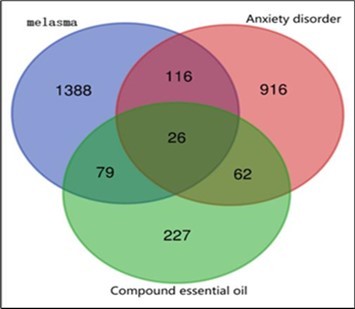
Download figure
Figure 2. Protein-protein interaction network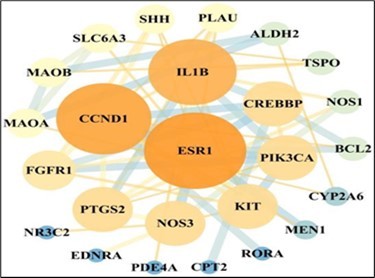
Download figure
| Cross-targets | Protein name | Uniprot ID | Degree value |
| ESR1 | Estrogen receptor | P03372 | 13 |
| CCND1 | G1/S-specific cyclin-D1 | P24385 | 12 |
| IL-1β | Interleukin 1β | P01584 | 11 |
| CREBBP | CREB-binding protein | Q92793 | 7 |
| PIK3CA | Phosphatidylinositol 4,5-bisphosphate-3-kinase catalytic subunit alpha isoform | P42336 | 7 |
| KIT | Mast/stem cell growth factor receptor | P10721 | 7 |
| NOS3 | Endothelial nitric oxide synthase | P29474 | 7 |
| PTGS2 | Prostaglandin G/H synthase 2 | P35354 | 7 |
| FGFR1 | Fibroblast growth factor receptor 1 | P11362 | 6 |
Enrichment analysis of GO function and KEGG pathway
GO function and KEGG pathway enrichment of 26 cross-targets were analyzed by Metascape database. List all kinds of top items according to p value were sorted from small to large.
Figure 3. Enrichment diagram of GO function(A) and KEGG pathway(B) 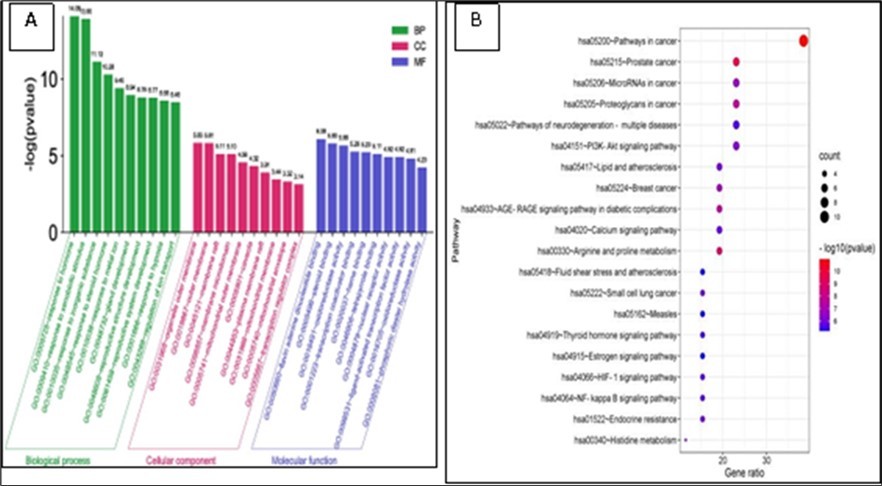
Download figure
Figure 3 showed the top 10 items in GO functional analysis. GO contained: 403 biological processes (BP) were mainly related to response to hormones, xenobiotic stimulus, inorganic substance, etc. 15 cell composition (CC) were mainly related to organelle outer membrane, outer membrane, membrane raft, etc. 23 molecular function (MF) were mainly related to flavin adenine dinuctide binding, steroid binding, oxidoreductase activity, etc.
KEGG pathway enriched 69 signaling pathways, among which the top 20 KEGG pathways enriched 20 targets, accounting for 77% of 26 cross-targets, as shown in Figure 3. The 20 signaling pathways were mainly related to 7 signaling related pathways (such as PI3K/Akt and calcium signal pathway, etc.), 6 cancer related pathways (such as pathways in cancer, prostate cancer, etc.), and 2 amino acid metabolism related pathways (including arginine and proline metabolism, histidine metabolism, etc.).These pathways also involved nervous system diseases.
“CEO- components- targets- pathways - anxiety with melasma” network
The network was constructed for 28 active components, 20 cross-targets and 20 KEGG pathways, as shown in Figure 4.
Figure 4. “CEO- components- targets- pathways - anxiety with melasma” network 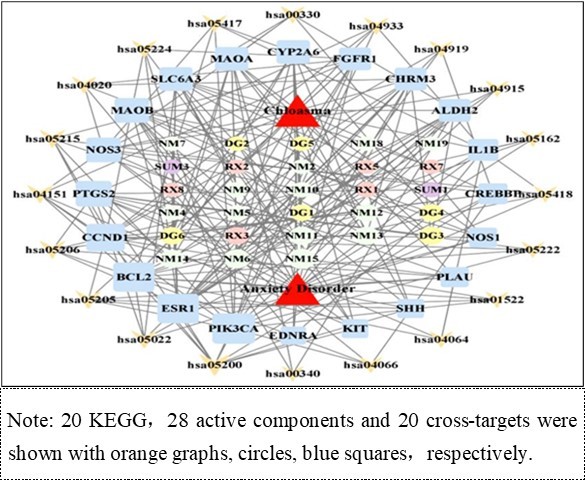
Download figure
The network consisted of 70 nodes and 215 edges. The degree values of neryl acetate, lavandulyl acetate, neral, N-phenyl-3-methyl-4-pentenamide and citral in LEO, 3-butenylphthalide, senkyunolide A and E-ligustilide in AEO, octyl acetate in BEO were greater than 4. The degree values of PIK3CA, CCND1, BCL2 and ESR1 were greater than 19. The degree values of pathways in PI3K/Akt signaling pathways, pathways of neurodegeneration- multiple diseases, calcium signaling pathway, etc. were greater than 5.
Results of molecular docking
The targets with high degree value in PPI network were compared with the targets enriched in PI3K/Akt signal pathway, then ESR, CCND1 and PIK3CA were selected as the core targets to verify molecular docking with four key components, including neryl acetate, citral, 3butylidenephthalide and octyl acetate. Tranexamic acid for melasma19 and diazepam for anxiety disorders20 were selected as positive controls, as shown in Table 4. The results of molecular docking showed that the 4 key components of CEO all had strong binding force with 3 core targets, and their binding energy were less than -5 KJ/mol. But their binding energy was weaker than the positive control drugs.
Taking 3-butylidenephthalide as an example, it was connected with amino acid residues of the target protein through hydrogen bonds, such as ARG-442 of ESR1, THR-190 and SER-189 of CCND1, ARG-14 and GLY-18 of PIK3CA, respectively, as shown in Figure 5.
Table 4. Molecular docking energy of active compounds with core targets. (KJ/mol)| Molecule name | ESR1 (7NFB) | CCND1 (2W96) | PIK3CA (7L1C) |
| Neryl acetate | -19.87 | -14.64 | -16.11 |
| Citral | -16.01 | -15.27 | -17.36 |
| 3-Butylidenephthalide | -19.12 | -21.21 | -20.79 |
| Octyl acetate | -16.82 | -11.59 | -11.51 |
| Tranexamic acid | -21.38 | -17.15 | -20.71 |
| Diazepam | -26.19 | -23.43 | -24.73 |
Figure 5. Molecular docking of 3-butylidenephthalide with ESR1(A), CCND1(B) and PIK3CA (C). 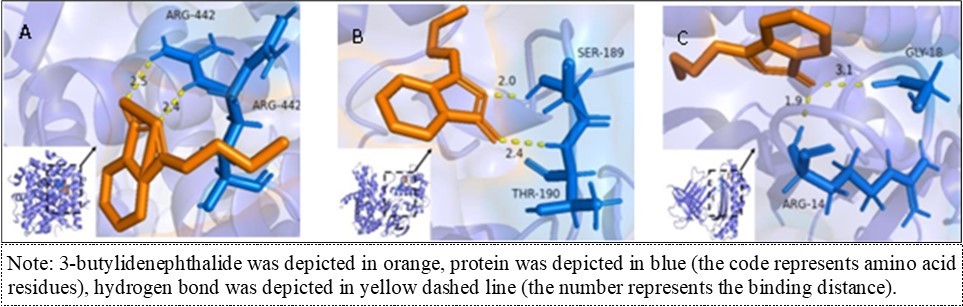
Download figure
Cell experiment results
The effect of CEO and key compounds on the survival rate of HaCaT cells
0.001~100 μg/mL of essential oil was added to HaCaT cells and cultured for 24 h to detect cell viability, as shown in Figure 6. Compared with control cells, cell growth showed varying degrees of inhibition when the concentration of essential oils and key compounds exceeds 10 μg/mL. When the concentration was less than or equal to 1μg/mL, they did not damage to HaCaT cells and had a promoting effect on the activity of HaCaT cells. So for subsequent research, 1μg/mL was chosen as the maximum experimental concentration for samples.
Figure 6. Effect of CEO and key compounds on HaCaT cell viability 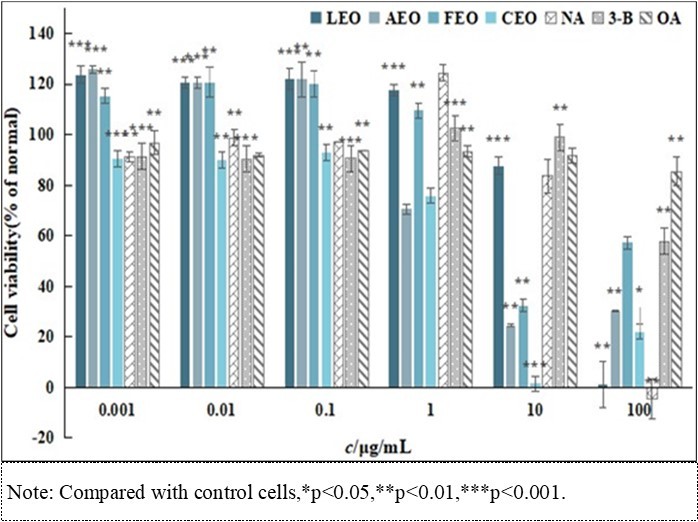
Download figure
Effect of CEO and key compounds on tyrosinase in HaCaT cells
The effect on intracellular tyrosinase was shown in Figure 7. Compared with the control cell group, the tyrosinase activity in the induced model group was significantly increased (p<0.05). Compared with the model group, the tyrosinase in the sample group decreased in varying degrees, and the inhibition rate of tyrosinase increased with the increase of drug concentration. The content of tyrosinase in 1μg/mL CEO group was 11.51% less than that in control cells. Inhibition of tyrosinase activity is the main strategy to reduce melanin production and avoid skin pigmentation
Figure 7. Effect of CEO and key compounds on tyrosinase activity in HaCaT cells.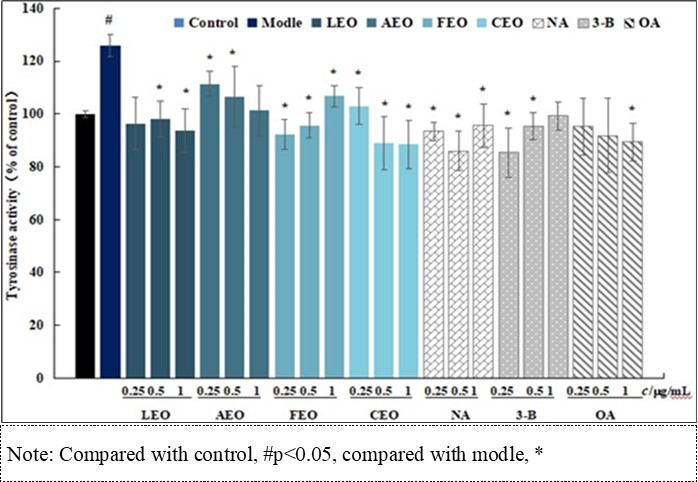
Download figure
Effects of CEO and key compounds on cellular inflammatory factors
The experimental results (Figure 8) showed that the levels of NO, TNF-α and IL-6 in the model group increased significantly compared to the control group after LPS inducting (p<0.01~0.001), indicating the successful modeling of inflammatory HaCaT cells. Compared with the model group, the levels of NO, TNF-α and IL-6 in each sample groups were reduced to varying degrees, and the degree of reduction in the essential oil group was more than that in the key compounds group, all showing a dose-dependent relationship. 1 μg/mL LEO, AEO,BEO, CEO and neryl acetate could reduce the level of NO, TNF-α, and IL-6 to control cells.
Figure 8. Effects CEO and key compounds on the levels of NO, TNF-α and IL-6 in LPS-induced HaCaT cells 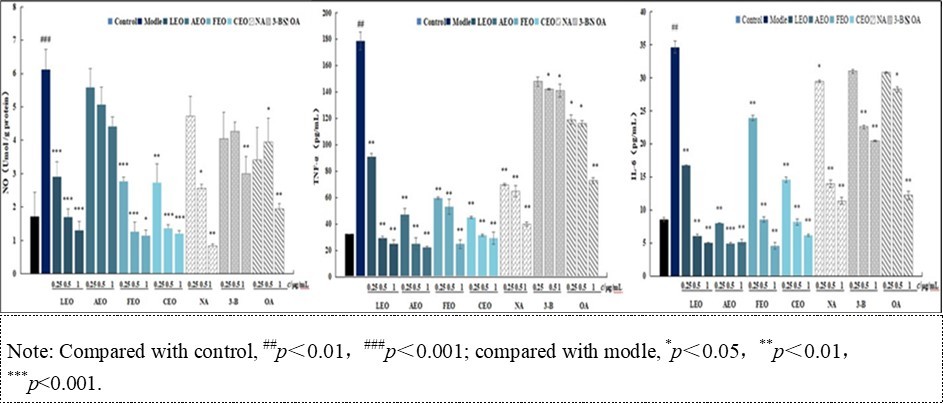
Download figure
Effect of CEO and key compounds on mRNA expression of key targets
Compared with the control group, the mRNA levels of PIK3CA, CCND1 and ESR1 in the model group were significantly increased with p<0.01, indicating successful modeling of inflammatory HaCaT cells. The CEO and key component groups effectively inhibited the mRNA expression levels of PIK3CA, CCND1 and ESR1 in inflammatory cells. Except for the low concentration groups of 0.25~0.5μg/mL LEO, 3-butylidenephthalide and octyl acetate, AEO, BEO, CEO and neryl acetate could regulate the mRNA levels of PIK3CA and CCND1 to control cell levels. Except for the 1μg/mL 3-butylidenephthalide treatment group, all other samples groups were able to regulate mRNA levels of ESR to control cell levels,as show in Figure 9. The cell experiment supported the results obtained in section “3.1”.
Figure 9. The effect of essential oils on mRNA expression of PIK3CA, CCND1 and ESR1 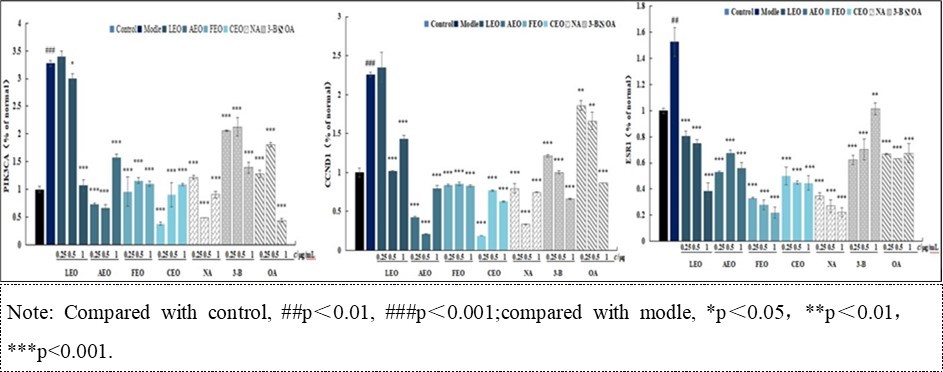
Download figure
Mice experiment results
Effect of CEO on spatial learning and memory in CUMS mice
After 28 days of CUMS stimulation modeling on mice, the water maze test was conducted on the mice, and the results were shown in Table 5 and Figure 10
Table 5. The results of the water maze experiment on mice (x±sd)| Indicator | control group | modle group | positive drug group | CEO group | NA group |
| Escape latency/s | 58.27± 19.80 | 103.08± 12.91## | 84.22± 17.89* | 83.43± 24.93* | 87.87± 29.65* |
| Swimming time in Remove target quadrant /s platform | 30.05± 10.45 | 17.58±13.68 | 31.02±4.64 | 25.26±3.51 | 33.01±5.98 |
| Number of platform crossing /time | 3.67±0.58 | 0.33±0.58## | 3.00± 0.00** | 2.00± 0.00** | 1.67±1.15 |
Figure 10. Activity trajectory diagram of mice in space exploration experiments 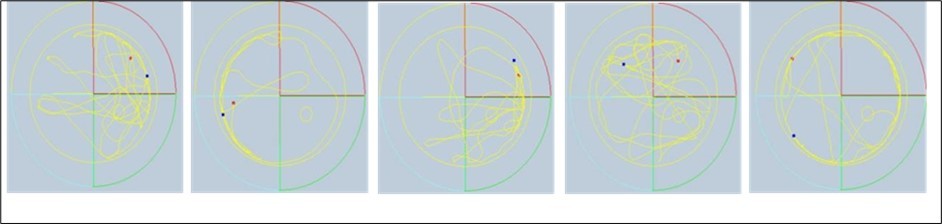
Download figure
Compared with the control group, the escape latency of the model group was significantly prolonged, the swimming time of mice was significantly shortened, the number of times mice crossed the target was significantly reduced, and the swimming trajectory of mice was sparse, indicating that after 28 days of CUMS stimulation, mice anxiety model was successfully established.
Compared with the model group, the escape latency of mice in each treatment group was between the control group and the model group, and the swimming time and cross platform frequency increased. The dense movement trajectories of mice in the essential oil group and positive group indicated that inhaling atomized CEO could help improve the anxiety state of mice induced by CUMS stimulation, and the effect of the CEO group on improving mice anxiety was better than that of the neryl acetate group.
Detection results of related proteins in mice hippocampus
Estrogen receptor(ESR1), cyclin D1 (CCND1), and interleukin-1β (IL-1β) were measured in mice hippocampus, and the results were shown in Figure 11.
Figure 11. Content of IL-1β, CCND1 and ESR1 in mice hippocampus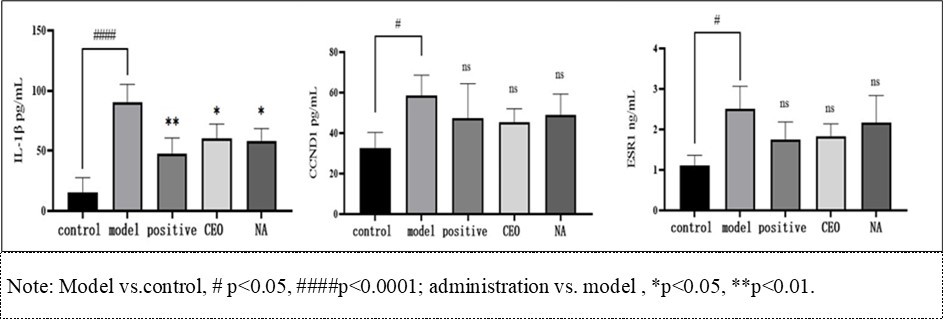
Download figure
Compared with the control group, the levels of IL-1β, CCND1 and ESR1 in the mice hippocampus of anxiety group increased (p<0.05, p<0.0001), indicating successful modeling. Compared with the
anxiety group, the levels of IL-1β (p<0.05, p<0.01), CCND1, and ESR1 in each treatment group decreased. CEO and neryl acetate downregulated the expression of IL-1β, CCND1 and ESR1 proteins in the hippocampus of CUMS stimulated mice, thereby alleviating anxiety symptoms in mice.
Discussions
Using network pharmacology as a tool, of, the active components of CEO in the treatment of anxiety with melasma were screened, including neryl acetate, citral, 3-butylphthalide and octyl acetate,etc. Neryl acetate in LEO is accompanied by lemon and lavender-like aroma21 and plays the role of anti-anxiety22, 23. Clinical olfactory and animal experiments have found that citral in LEO can act on the brain to alleviate depression through the olfactory system. Citral also has a stronger tyrosinase inhibition effect than limonene and plays a leading role in whitening effect of LEO24. 3-Butylidenephthalide is a phthalide component in AEO. Research25 has shown that phthalide components in angelica sinensis can improve the disease of melasma by promoting blood circulation and removing blood stasis26. And 3-Butylidenephthalide is an effective inhibitor of norepinephrine and 5-HT reuptake, which can cross the blood-brain barrier and improve brain blood microcirculation, and have neuroprotective effects on the central nervous system27. Octyl acetate is the main component of BEO, which has anti-inflammatory, blood-activating and analgesic effects30. Therefore, it is speculated that CEO may play a role in the treatment of anxiety with melasma through aromatic esters to soothe emotions, aldehydes to whitening, antidepressant to promote blood circulation, phthalides to remove blood stasis and neuroprotection.
PPI network analysis showed that CEO mainly treated anxiety with melasma through estrogen receptor (ESR), cyclin-D1(CCND1) and interleukin 1β (IL-1β). ESR is the target of estrogen, which can up-regulate the expression of B-cell lymphoma-2 (BCL-2) in astrocytes by acting on nuclear ERα, thus inhibiting neuronal apoptosis31. Estrogen can also act on ESR in melanocytes through PKA pathway, enhance cAMP level, and up-regulate expression of cAMP response element binding protein (CREB), microphthalmoid related transcription factor (MITF) and tyrosinase (TYR), then stimulating melanogenesis32. The expression of CCND1 is closely related to the proliferation of melanocytes and can lead to the occurrence of melanoma33, 34. When the nervous system is damaged, the expression of CCND1 in neurons increases to promot the production of neurogliosis36. Studies37 have shown thatinhibiting the expression of IL-1β and other inflammatory mediators in the hippocampus can indirectly protect against neurotoxic injury. And stimulation of IL-1β can also cause the activation of melanocytes, resulting in the formation of melasma38. These showed that CEO mainly regulates anxiety with melasma through hormone stimulation, regulation to cell apoptosis and immune inflammation.
GO showed that targets were enriched in hormone response and steroid binding, which further explained the important role of estrogen. Then the expression of proteins such as BCL-2, CREB, MITF and TYR will be up or down, which plays a role in the treatment of anxiety with melasma. PI3K/Akt signaling pathway plays an important role in improving anxiety41 and melanoma42, mainly involved in neuronal apoptosis, neuroinflammation, oxidative stress and other mechanisms43. More and more evidences show that the regulation (activation or inhibition) of PI3K/Akt signaling pathway by traditional Chinese medicine can not only help prevent neurodegenerative diseases, but also slow down their progress44. The mechanism is closely related to the activation of PI3K and phosphorylation of Akt. In Figure 12, Akt promotes eNOS phosphorylation to produce No. NO can stimulate TYR and increase secretion of melanin45. In addition, the production of NO and tyrosinase activity in female skin are significantly higher than those in men46, indicating that estrogen can promote the expression of NO by stimulating eNOS. In mice with anxiety disorder, the concentration of NO increased significantly47. Akt can also promote the expression of BCL-2. BCL-2 is an important anti-apoptotic protein48. Up-regulating BCL-2 can reduce the production of oxygen free radicals in melanocytes, thus inhibit melanocyte apoptosis49. Besides, it can also inhibit hippocampal neuronal apoptosis and protect the central nervous system50. Therefore, it is speculated that CEO can act on the corresponding targets of PI3K/Akt signal pathway and regulate the activity of the targets through active components such as neryl acetate and citral, thereby reducing the NO secretion of eNOS, promoting cell proliferation by Cyclin-D1, and the anti-apoptotic effect of BCL-2.
Figure 12. Regulation of PI3K/Akt signal pathway by active components of CEO. 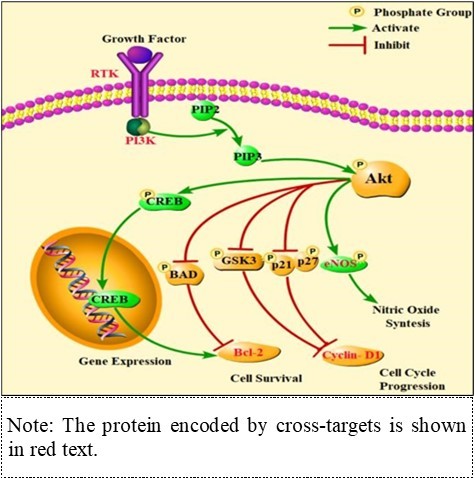
Download figure
HaCaT cells and CUMS mice experimental datas showed that treating inflammatory HaCaT cells with essential oils and key compounds led to a reduction in inflammatory factors (NO, TNF-α, and IL-6) and in the mRNA expression levels of PIK3CA, ESR1 and CCND1. Inhalation of atomized essential oils had a positive impact on anxiety-like behavior in CUMS mice. The Swimming time and cross platform frequency of mice were significantly increased, and at the same time, the levels of ESR1, CCND1 and IL-1βin the hippocampus of CUMS mice were suppressed. At the same dose, the effect of CEO on tyrosinase, inflammatory factors, related protein down-regulation and anti-anxiety properties in mice exceed that of single essential oils and even exceed the key compound neryl acetate. CEO is a mixture of monomers, it is speculated that there may be a synergistic mechanism between these components, which requires further exploration and in-depth research.
Conclusions
This article explores the possible mechanism of action of CEO on anxiety disorder with melasma. CEO may be that 28 active compounds such as neryl acetate, citral, 3-butylidenephthalide and octyl acetate, etc. act on 20 potential cross- targets such as ESR1, CCND1 and PIK3CA, etc. in the KEGG pathways such as PI3K/Akt signaling pathway, calcium signaling pathway etc., regulateing endocrine, cell proliferation and apoptosis, oxidative stress, inflammatory response and neuronal damage. Some of the research results have been verified by cell experiments and CUMS mouse experiments. It provides a foundation and reference for further in-depth research in the future.
Authors' contributions
Liping Liu was responsible for designing the research for this project. Xu Xu and Shengdong Wang conducted the primary experiments, performed network pharmacology analysis, analyzed data, and wrote the original draft. Chang Liu participated in the cell experiments. All authors have read and agreed to the published version of the manuscript.
Ethics Consent
This article does not contain any experimental studies with human. The mouse experiment has been approved by the ethics committee of the relevant institution.
References
- 1.Athar M. (2006) Prevalence and awareness of melasma during pregnancy. , International Journal of Dermatology
- 2.Shi A. China Medical University (2020) Study on the relationship between clinical characteristics and depression and anxiety in female patients with melasma. Liaoning:.
- 3.Liu Z. (2012) Network Pharmacology: a New opportunity for Modernization of traditional Chinese Medicine. Acta Pharmacologica Sinica.
- 4.Ye Y. (2021) Clinical study of embedded needle combined with traditional Chinese medicine in the treatment of melasma of liver depression and qi stagnation. Guangdong: Guangzhou University of traditional Chinese Medicine.
- 5.Zhong Y. (2019) Sedative and hypnotic effect of compound Anshen essential oil inhaled and GC-MS analysis of its chemical constituents, Research and Development of Natural products.
- 6.Zhang K. Jiao Tong University (2019) The anxiolytic effect of cedarwood essential oil and its mechanism. , Shanghai: Shanghai
- 7.Hu J. (2014) Study on the inhibitory effect of Lemon essential Oil on tyrosinase activity in Vitro. Proceedings of the 10th China Cosmetics Symposium .
- 8.Chen, J H.. Effects of Extract of Angelica sinensis on Melanin Synthesis in Co-culture System of Human .
- 10.KWEA Dontje. (2024) The Therapeutic Potential of Essential Oils in Managing Inflammatory Skin Conditions: A Scoping Review, Pharmaceuticals.
- 11.Wang S. (2020) Effects of lemon essential oil on anxiety behavior and cognitive ability of off spring autistic rats, Research and Development of Natural products.
- 12.Min L. (2005) The effects of angelica essential oil in social interaction and hole-board tests. Pharmacology, Biochemistry and Behavior.
- 13.Xie Y. (2021) Application characteristic of Danggui (Angelicae sinensis Radix) in records of Chinese medicine with reference to western medicine. , Journal of Shandong University of traditional Chinese Medicine
- 14.Liu D. (2020) Research progress on chemical constituents and pharmacological effects of frankincense, Chinese Herbal Medicine.
- 15.Ha R. (2021) Research progress of chemical constituents, pharmacological effects and prediction and analysis of quality markers of frankincense. , Chinese Journal of traditional Chinese Medicine, (
- 16.Zhang B. (2015) Studies on the chemical composition, antioxidation and antibacterial activity of essential oil from lemon peel, Food Industry Science and Technology.
- 17.Zhao W. (2009) GC-MS analysis of volatile components in essential oil from lemon peel, Food Industry Science and Technology.
- 18.Yang L. (2021) GC-MS Analysis of volatile Oil from Luxiang and frankincense and study on Antibacterial activity of Helicobacter pylori. , Chinese Journal of traditional Chinese Medicine, (
- 19.Wang Y. (2021) GC-MS combined with network pharmacology and molecular docking to explore the analgesic active components and mechanism of frankincense volatile oil, World Science and Technology-Modernization of traditional Chinese Medicine.
- 20.Li J. (2013) Research progress of tranexamic acid in the treatment of melasma. , Chinese Journal of New drugs and Clinic
- 21.Authier N. (2009) Benzodiazepine dependence: focus on withdrawal syndrome, Annales Pharmaceutiques Françaises.
- 22.Géraldine L. (2023) Neryl acetate, the major component of Corsican Helichrysum italicum essential oil, mediates its biological activities on skin barrier. PloS one.
- 23.Mizuho T. (2011) Interspecies comparison of chemical composition and anxiolytic-like effects of lavender oils upon inhalation, Natural Product Communication.
- 24.Zhang Y. (2020) Natural volatile oils derived from herbal medicines: A promising therapy way for treating depressive disorder, Pharmacological research.
- 25.Hang T. Medical University (2014) Imaging observation of human brain area activated by aromatic substances through olfactory pathway. , Anhui: Anhui
- 26.Song S. (2012) Experimental study on the effect of total phthalide of angelica sinensis on promoting blood circulation and removing blood stasis, Chinese Herbal Medicine.
- 27.Li H. (2019) Clinical observation of compound angelica sinensis injection acupoint injection combined with photon rejuvenation instrument and Q-switched laser in the treatment of facial melasma. , Journal of Hubei University of traditional Chinese Medicine
- 28.Gong W. (2020) Study on antidepressant effect and mechanism of angelica sinensis sinensis and its active components. , Shanxi: Shanxi University
- 29.M Y Liu. (2024) Effect and mechanism of Chuanxiong Rhizoma on permeability of blood-brain barrier, Chinese Traditional and Herbal Drugs.
- 30.P O Kumar. (2022) Comparison of Volatile Constituents Present in Commercial and Lab-Distilled Frankincense (Boswellia carteri) Essential Oils for Authentication. Plants.
- 31.Liu Q. (2016) Study on the synthesis and kinetics of octyl acetate, Chemical Industry for Daily use.
- 32.Li X.Study on the neuroprotective mechanism of isopsoralen on spinal cord through estrogenα receptor.
- 34.Hong W. (2021) . Advances in etiology and pathogenesis of melasma, Skin Diseases and venereal Diseases .
- 35.Lin T. (2004) Study on proteins related to extracellular signal-regulated kinase pathway in malignant melanoma and common nevus, Chinese Journal of Dermatology.
- 36.Tang Q. (2011) G6PD regulates the cycle progression of human melanoma cells through cyclin D1/D2. , China Journal of Biochemistry and Molecular Biology
- 37.Ying L. (2014) Effects of glycyrrhizin on the contents of SOD, MDA and NO in melasma mouse model and the proliferation of melanoma A375 cells. , Chinese Journal of Gerontology
- 38.Xiu G. (2018) Effects of hyperbaric oxygen therapy on neurological function and CyclinD1 expression in rats with traumatic brain injury. , Journal of Clinical Neurosurgery
- 39.Zhu Z. (2019) Analysis of serum IL-1β, IL-6 and IL-10 levels in patients with anxiety disorder. , International Journal of Psychiatry, (
- 40.He L. (2022) Guide to the application of freckle whitening skin care products in melasma, Chinese Journal of Dermatology and venereology.
- 41.Li P. (2020) Study on the effect and mechanism of paeoniflorin on depression and anxiety-like behavior induced by. Bayk8644 in rats, Laboratory Animals and Comparative Medicine .
- 42.Wang X. (2020) Association between calcium signal transduction pathway gene polymorphism and specific survival time of cutaneous melanoma. , Jilin: Jilin University
- 43.Shan N. (2022) Xiaoyao Powder improved anxiety and depression behavior of VaD mice by regulating mPFC-BLA myelin function through PI3K/AKT/mTOR pathway. , Journal of Nanjing University of traditional Chinese Medicine
- 44.Qin W. (2022) Research progress of autophagy and PI3K/Akt/mTOR signaling pathway in drug resistance of melanoma, Oncology Medicine.
- 47.Cianciulli A. (2020) Microglia Mediated Neuroinflammation: Focus on PI3K Modulation. Biomolecules.
- 49.Dinesh D. (2011) Antianxiety-Like Activity of Gallic Acid in Unstressed and Stressed Mice: Possible Involvement of Nitriergic System, Neurochemical Research.
- 50.Hisamoto K. (2000) Estrogen Induces the Akt-dependent Activation of Endothelial Nitric-oxide Synthase in Vascular Endothelial Cells. , Journal of Biological Chemistry, (
- 51.Michał T. (2022) Bcl-2-proteins and neurotrophins as important factors for the survival of peripheral neurons in transgenic animals. Postepy biochemii.