
Dose Body Mass Index (BMI) Fit to Muscular Individual?
Abstract
Body mass index (BMI) seemingly is an important scale for the body types determination in individuals with different ethnicities. Accordingly, individuals with BMI< 18.5 are classified as slim or underweight and people with BMI between 18.5 -24.9 are called normal body types. Subsequently, those individuals with BMI between 25-29.9 are categorized as overweight and people with BMI > 30 are classified as obese people. Nonetheless, important question is where the muscular individuals are located in this BMI scale ? Macular induvial also called overweight or obese in BMI scale which can create kind of confusion for individuals because they might try to lose weight whilst they do not actually need it. Thus ,it seems BMI measure is not a sensible measure for muscular individuals as otherwise they can be at risk of health problems in various ways. Uses of the another apparatus such an ordinary weight scale or computational devices which could estimate the body type according to the BMI more accurately can be helpful.
Article Information
- Received
- Accepted
- Published
Copyright © 2018 Nasim Habibzadeh
 This is an open-access article distributed under the terms of the Creative Commons Attribution License, which permits unrestricted use, distribution, and reproduction in any medium, provided the original author and source are credited.
Corresponding author: Nasim Habibzadeh, PhD in Sport Science, Department of Sport Science, Teesside University, UK —
Competing Interests
The authors have declared that no competing interests exist.
Funding
No specific funding statement was provided by the authors.
Data Availability
No data-availability statement was provided by the authors.
Citation:
Introduction
Quetelet index or body mass index (BMI) is value which is derived from body weight (or body mass and height measures from different individuals which was introduced in the 19th century . More specifically, BMI is defined according to the body mass index in kilogram (Kg) that is divided by the height square in meter (m2) at which is shown through formula below 1.
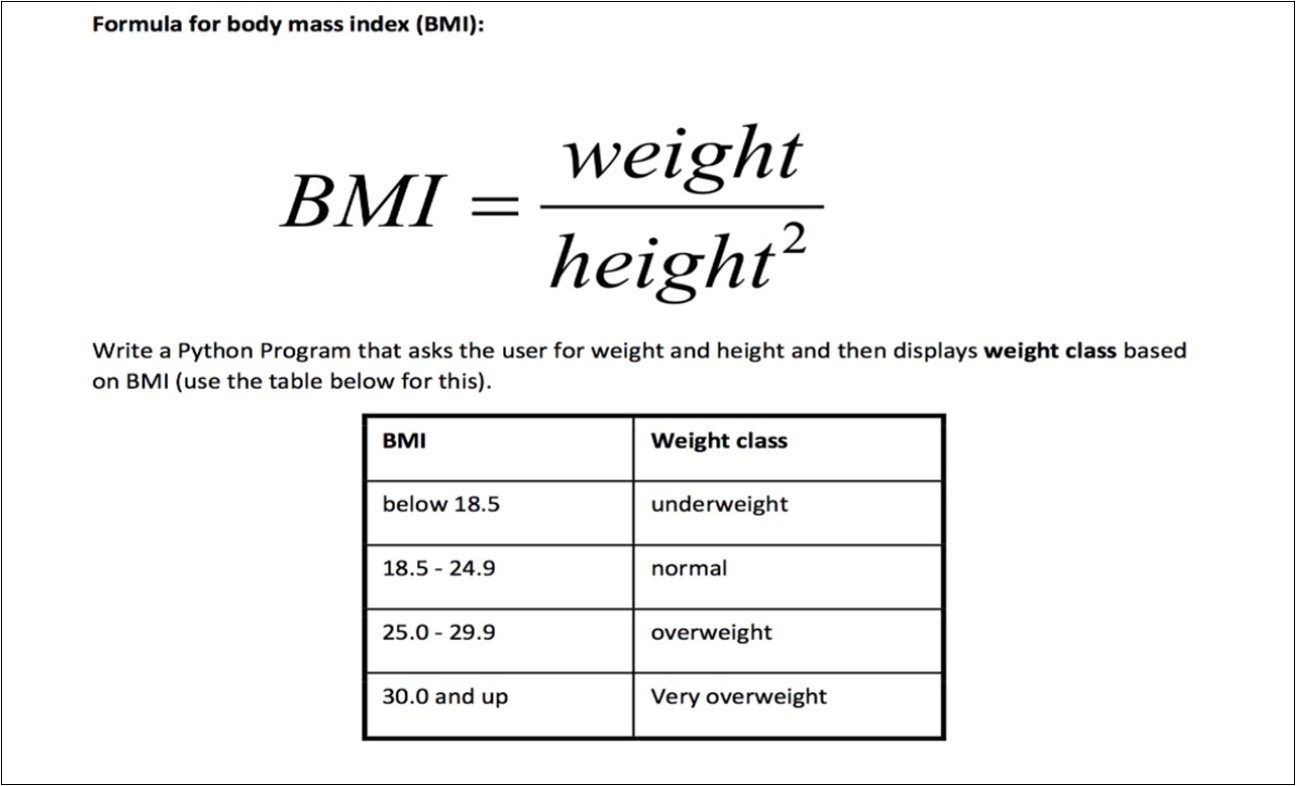
Body mass scale is an important risk assessment measure for different weight ranges and it is seemingly a kind of determination of body fat in different people. Correspondingly, individuals who have the BMI< 18.5 are classified as slim or underweight and people who have BMI between 18.5 -24.9 are called normal body types. Subsequently, those individuals who have BMI between 25-29.9 are categorized as overweight and ultimately the people who have BMI > 30 are classified as obese people.
Nonetheless , the important question is where the muscular individuals are located in this scale ? The Body mass index scale shows all people with a high level of muscles also overweight or obese ! This is because the BMI scale is designed in accordance to the body fat levels not body muscle mass levels . Thus , a question will appear that whether the BMI scale is an accurate measure for muscular individuals 2 ?
This BMI measure can create some confusions for individuals with a higher level of muscle mass regarding their appearances since it can disturb their diet types or the amount of the movement they do in overall. The people can do extra attempts through over activities in their daily workouts or eat less of their real needs to lose weight that physiologically can put their health at major risks. They may lose their body water, minerals and more importantly their real body mass and as a result the states of being too weak and frail to deal with daily tasks 3, 4.
Thus, it seems the people with a high level of muscle mass require to stop to use the BMI scale to measure their body types and alternatively to choose a more healthy scale to avoid health associated problems as it sounds BMI measure is not a good scale for people with muscular body types. Utilizing another apparatus for example an ordinary weight scale is a more rational instrument for people with a greater level of muscle mass for their general health information. Other computational devices which could estimate the body type according to the BMI more accurately may assist individuals with different ethnics.
References
- 1. (2009) National Obesity Observatory. Body Mass Index as a Measure of Obesity. , London, England: Public Health England
Cited by (2)
This article has been cited by 2 scholarly works according to:
Citing Articles:
Diabetes & Metabolism (2022) Crossref OpenAlex
Aurélie Berot, A. Gitton, A. Diallo, Assia Rahim, C. Lukas et al. - Diabetes & Metabolism (2022) Semantic Scholar