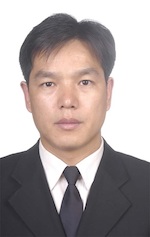
Yonghui Li Ph. D. (Academy of Military Medical Sciences)
Director, Shenzhen University General Hospital, Shenzhen, Guangdong Province · China
Editorial leadership for Journal of Hereditary Diseases
Research interests
- Epigenetics
- Leukemia
Biography
Dr. Yonghui Li serves as Director at Shenzhen University General Hospital in Shenzhen, Guangdong Province, China. He received his education from the Academy of Military Medical Sciences and has established a distinguished research program focused on epigenetics and leukemia. His work has elucidated critical molecular mechanisms in acute myeloid leukemia, particularly in t(8;21) subtypes, including the identification of novel epigenetic regulatory circuits involving fusion proteins, microRNAs, and transcription factors. His most influential contribution, published in EMBO Molecular Medicine in 2017, described a novel AML1-ETO/THAP10/miR-383 mini-circuitry contributing to t(8;21) leukemogenesis and has been cited 28 times. Dr. Li's research has advanced understanding of epigenetic silencing, signal pathway activation, and genomic stratification in intermediate-risk acute myeloid leukemia, with implications for prognostic assessment and therapeutic intervention.
Considering JHD for your work?
This journal is guided by Yonghui Li (Director, Shenzhen University General Hospital, Shenzhen, Guangdong Province) and a peer-review board of practising researchers. Open access, author-retained copyright (CC BY), and a clear editorial process.